


 Dec 31, 2025
 3 min read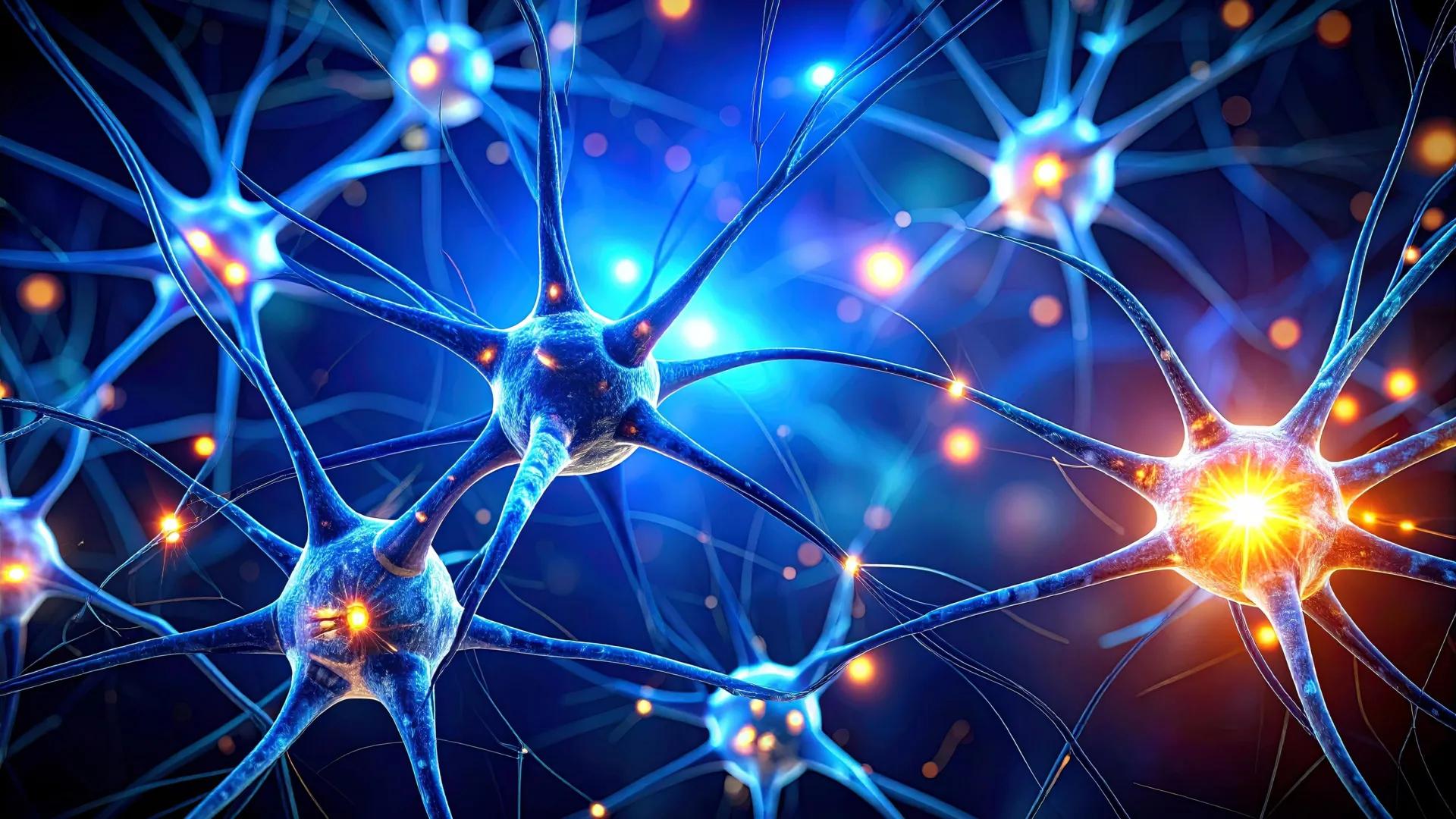
Researchers have created a protein that allows neurons to detect faint chemical signals they receive from other brain cells.By tracking glutamate in real time, scientists can see how neurons process incoming information before finally sending out a signal.This reveals a missing layer of brain communication that has never been seen before.This discovery opens the way for scientists to study learning, memory and brain diseases.
The brain has a secret language, scientists have discovered
Scientists may finally be able to hear the brain's quietest messages, revealing how neurons decide when to fire.
- December 29, 2025
- Allen Institute
- Scientists have developed a protein that can detect invisible chemicals that neurons receive from other cells.By tracking glutamate in real time, scientists can finally see how neurons process incoming information before sending signals.This reveals a missing layer of brain communication that has not been seen before.The discovery could revolutionize the way scientists study learning, memory and brain diseases.
Scientists have developed a protein that can record the chemical messages brain cells receive, rather than just focusing on the signals they send.These incoming signals are created when neurons release glutamate, a neurotransmitter that plays a key role in brain communication.Although glutamate is essential for processes such as learning and memory, its activity is difficult to measure because the signals are weak and occur so quickly.
This new tool makes it possible to detect these subtle chemical messages as they arrive, giving researchers access to a long-hidden part of brain communication.
Why is this revelation important?
Being able to observe incoming signals allows scientists to study how neurons process information.Each brain cell receives thousands of inputs and how it combines these signals to determine whether it produces an output.This process is believed to underlie decisions, thoughts, and memories, and studying it directly could help explain how the brain performs complex calculations.
This progress also opens up new opportunities for disease research.Problems with glutamate signaling have been linked to conditions such as Alzheimer's disease, schizophrenia, autism, epilepsy, and others.By measuring these signals more precisely, researchers may be able to determine the biological origins of these disorders.
Drug development can also be beneficial.Drug companies can use these sensors to see how experimental treatments affect real-world synaptic activity, speeding up the search for more effective treatments.
Introducing the powerful glutamate sensor
The protein was engineered by researchers at the Allen Institute and HHMI's Janelia Research Center.Called iGluSnFR4 (pronounced "glue sniffer"), it acts as a molecular "glutamate indicator".Her senses allow her to detect even the faintest signals exchanged by neurons.
By revealing when and where glutamate is released, iGluSnFR4 provides a new way to interpret the complex processes in the brain that support learning, memory and emotion.It allows researchers to observe neurons interacting in the brain in real time.These findings were recently published in Nature Methods and could significantly change the way neural activity is measured and analyzed in neuroscience research.
How brain cells communicate
To understand the implications of this advance, it is useful to look at how neurons work.The brain contains billions of neurons that send electrical signals along branch-like structures called axons.When the electrical signal reaches the tip of the axon, it cannot pass through a small gap to the next neuron called a synapse.
Instead, the signal triggers the release of neurotransmitters into the synapse.Glutamate is the most common of these chemicals and plays an important role in memory, learning and mood.When glutamate reaches the next neuron, it causes the cell to burn and continue the communication chain.
From snippets to full interviews
This process can be compared to falling dominoes, but it is much more complicated.Each neuron receives information from thousands of others, and only certain combinations and patterns of activity cause the receiving neuron to activate.Using this new protein sensor, researchers can now determine which patterns of incoming activity lead to this response.
Until now, it was almost impossible to observe these incoming signals in living brain tissue.Previous techniques were too slow or lacked the sensitivity needed to measure the activity of individual synapses.As a result, researchers could observe only fragments of the communication process rather than the entire exchange.This new approach allows them to capture the entire conversation.
Making sense of neural connections
"It's like reading a book where all the words are scrambled and not understanding the order of the words or how they are organized," said Kaspar Podgorski, Ph.D., study author of the study and senior scientist at the Allen Foundation.
Before protein sensors like iGluSnFR4 were available, researchers could only measure signals coming out of neurons.This left a large gap in understanding, as the incoming signals were too fast and too subtle to see.
"Neuropiers have very good ways of measuring structural relations between neurons, and in separate experiments, we can measure what neurons in the brain say, but we are not good at combining these two types of information. It is difficult to measure what neurons say to other neurons," Podgorski said.
Collaboration after success
"The success of iGluSnFR4 is a result of our close collaboration that began at Janelia's HHMI research campus between the GENIE project team and the Kaspar lab," said Dr. Jeremy Hasseman at the HMI Research Camp. "This was an excellent example of collaboration between laboratories and institutions to enable new discoveries in neuroscience."
A new window on brain function
This discovery overcomes major barriers in modern neuroscience by enabling direct observation of how neurons receive information.By making iGluSnFR4 available to researchers through Addgene, scientists have a powerful new tool to study brain function in more detail.As this technology develops, it could help answer some of the brain's most pressing questions.
The material is provided by the Allen Institute.Note: Content may be edited for style and length.
- Abhi Repair, Adrian Negrean, Yang Chen, Risyashyrying Iyel, Daniel Rep, Liuye, Liu, Palutla, Michael E. Xiie, Birant J.Continue, Centle Svobboda, Turner C. Hasemd's, Tyr's Hasemd's.Salom.moslashtirilgan ditlarga sezgirlikni oshiradigan inspeakbatorlar orqali.Hababka Nathan, 2025;DOI: 10,1038/s
Refer to this page: