

 Dec 29, 2025
 3 min read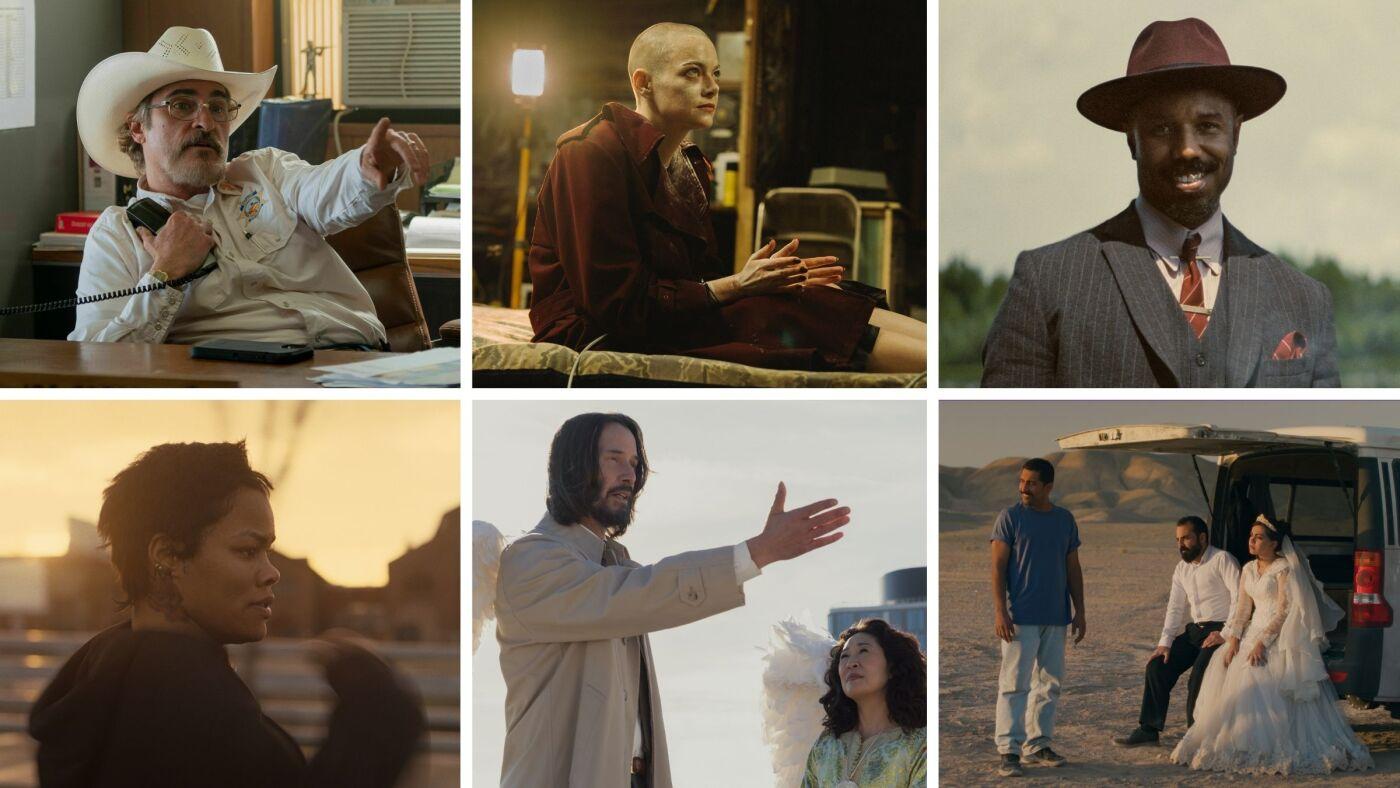
Now is not the time to seek subtlety, nostalgia and neutrality on screen.
'To ask questions' is not enough.The best films of the year are taking shape
In 2025, amid intense political turmoil and division, James L. Brooks released his first film in 15 years, a wistful, Obamacore-cloudy-eyed political romantic drama that looks back to 2008.Despite a star-studded ensemble that includes Jamie Lee Curtis and Albert Brooks, Ella McCay is easily one of the worst movies of the year for a number of reasons, not least a line from one character heralding 2008 as "a better time when we all liked each other."(Obvious follow-up question: Who are “We”?) What’s even more brilliant is that the protagonist, played by Emma McKee, becomes the de facto Anyparty governor of Anytown, USA – her political party is never mentioned, and the state she lives and serves is never mentioned.
Revisionist Singularity has zero interest in meeting The Moment, even though many other films released this year at least tried to engage with it directly.This does not mean that everyone succeeded in their goals.But before I saw Ella McKay, I wondered what it meant for a film to "succeed" in addressing sociopolitical issues.Each new day conjures up as many, if not more, comic and dystopian realities than any screenwriter can imagine.Brooks' film, no less.At the very least, it clearly shows what doesn't work in this space: nostalgia and a position of neutrality.
Beyond this very low bar, analyzing how to evaluate work involving politics is very difficult, and admittedly dependent entirely on a subjective view of what is time and need.The product is a mixed bag, but an interesting one.Great original films like Wicked: For Good and The Running Man clearly showed radical ideas through the anti-authoritarian struggles of their original writers, but ended up being exaggerated.Stick-it-to-the-human offers little other than screaming.In contrast, two great movies that both star Josh O'Connor - Mastermind and Wake Up Dead Men - let the political themes fade into the background but give way to meaningful emotional impact.
One of the hard work of hard work is made of this year as "competition" in the "to the Township - to move people.It is possible to be used in a lot of things: dedictically or, as a case with luca guadagnino's afth, obtely.The muslims of the Muslims Campus Jusic Jusy is like a prank (andyo elder (andy EDIFELY) to argue.He's not allowed on all of the kinds of his story - until it's upsetting the notice of notice than the opponent.
Less obscure but far more strange are Ari Easter's Eddington and Yorgos Lanthimos's Begonia, both of which have taken American politics by storm in recent years.Eddington stars Joaquin Phoenix as the sheriff of a small town in rural New Mexico in the early months of the pandemic, and deftly captures the craziness and conflict of the time—over social distancing, fights over wearing masks, dangerous online conspiracy theories that suck in many while they're isolated.Begonia also feels deeply withdrawn from life.In the original, when Teddy (Jesse Plemons), a conspiracy theorist who claims to have traced the "whole digest" of ideologies (alt-right, alt-left, Marxism, etc.), writes many of his grievances on Michelle (Emma Stone), as she is the idea of the pharmaceutical CEO she kidnapped.(This sounds completely out of control, unless you remember the hoopla around Pizzagate.)
Sometimes to get a vibe - and in these cases, that vibe is the force of our total illusion - is enough to carry a movie.But Astor and Lanthimos have made it clear that they want to break through the "echo chamber" of their respective projects, and they're not quite getting it.It's a tall order to change your view of "the other side" when the leader of the "side" - or at least, one of many - spreads A.I.Slop videos trolling his critics.But in Eddington, as in After the Hunt, the presentation of uncomfortable landscapes and hideous characters takes precedence over storytelling.(Eddington also shortchanged the lone black character, a police officer played by Michael Ward, by casting him as a one-dimensional stand-in for Black Lives Matter-era concerns after hearing the news of George Floyd's murder.)
On its own, Bugonia is anything but vague.Its ending - spoilers ahead - is inspired by the Korean film Save the Green Planet!It follows the same basic plot as Star Wars, revealing that CEO Michel is actually an alien sent to Earth to evaluate "human experiments" and view them as failures worthy of destruction.But her defeatist attitude pretty much destroyed everything that came before it, and instead of feeling "challenged," I was annoyed at feeling so smug about the outcome.Is this all?
Other projects this year seemed to reflect filmmakers' efforts at political introspection, and while they didn't always look good enough, the results were still worth studying.Aziz Ansari's directorial debut, Good Fortune, is both comedic and funny, starring Keanu Reeves as a guardian angel.Ansari's character, Arz, lives out of his car in Los Angeles, struggling financially as a hard worker who trades lives with Seth Rogen's wealthy tech brother Jeff, the film provides a humorous and timely commentary on Arz's many infamous actions as a postman and factory worker.
For Hollywood comedy, wealth renews inequality.It misrepresented news stories about Amazon, including a pro-union subpoena.But the film is minimally sanitized, and Ansari readily admits that his situation is closer to Jeff's than to Arj's, so Good Luck's critique ultimately links to the machinations of capitalism.may give up.As Jeff and Orge's lives change, the financial situation of the music industry does not improve from the beginning of the film, yet the message seems to be that Orge just needs to have a positive outlook and turn it into a positive one.(Spike Lee's Maximum 2 Minimum Equality is emphasized in addressing wealth imbalances.)
It is this disconnect between filmmaking intent and impact that prevents Paul Thomas Anderson's thriller "Battle After Battle" from being as politically effective as some argue.That's at least partly by design;He told the Los Angeles Times that he avoided "putting politics at the forefront" in favor of playing characters that audiences care about, and as timely as OBAA may seem, history always repeats itself.(Fascism, he said, "never goes out of style.") Fair enough — but it's remarkable that it paints a vivid picture of the sentiment.Suffering middle-aged white men, a secret attempt to shelter immigrants from law enforcement, and a secret society of white nationalists.
Less self-assured is his account of black radicalism, which comes across as unintentionally patchy or, less charitably, repulsive.In the script for Perfidia (Teyana Taylor), a character who primarily anchors the first third of the film but disappears for the rest of it, Anderson draws from the markers of Blaxploitation and the sordid history of black women's fetishization of white men to craft a darkly conscious revolutionary, a character whose hypersexuality is inextricable from her actions.Taylor's magnetic and committed performance hints at how these tensions could have been explored more deeply, but it doesn't quite overcome the script's scattered references and rushed characterization.(Licorice Pizza, Black women weren't featured so prominently in his films before OBAA.)
Now it seems to require more than just asking questions and making assumptions.It requires honesty about attitude, commitment to ethos, the story you want to tell on the surface, and the results.A political refugee who lived under an assumed name during the Brazilian military dictatorship.In one scene, a resistance leader named Elsa (Maria Fernanda Candido) expresses solidarity with former educator Marcelo (Wagner Moura) and his father-in-law Alexandre (Carlos Francisco) over the death of Marcelo's wife and vows that Brazil will pay.
Of all those films, It Was Just an Accident by Iranian director Jafar Panahi is perhaps the most directly connected to the present moment, in no small part because the line between fiction and reality has been blurred by outside forces.Earlier this month, Panahi was sentenced to one year in prison in Iran, as well as a two-year ban on all international travel.This is not the first time Panahi, a longtime critic of the Iranian government, has been outspoken.intended;many of his films were made in secret, including his 2011 documentary This Is Not a Movie, which he filmed under house arrest pending the results of an appeal against his six-year prison sentence and 20-year film ban.
In Misfortune, Vahid (Vahid Mobasseri), a former political recruiter, stumbles upon a man he's sure was one of his friends and kidnaps him to exact violent revenge.(Details to follow.) The man, Eghbal (Ebrahim Azizi), insists he has the wrong person, and Vahid, now unsure, enlists some of the other victims to see if they can find him.recognition.Panahi puts the concept of justice under the microscope as they discuss his identity and how he gets his revenge.Eventually, the man finally confesses out of desperation, insisting that he was just following orders.He also says that at first he had remorse, but that he got used to it over time.
Time hangs like a dark cloud over misfortune and the startling final scene suggests that Wahid will never be able to shake off the traumas he has endured.Taken differently, Wahid's final decision – to show mercy to his tormentor – may be morally laudable, but futile.In an episode of the Filmspotting podcast, co-host Adam Kempenaar said of The Accident, "It's one of those movies that ... basically asks these questions — big, moral and ethical questions, but there's also clarity. There are conclusions. It leaves some interpretation open at the end ... but we'll see what we do within that."
Here's the thing: political discourse has been fully exposed, and all the -isms and -phobias are no longer hidden behind layers of coded language and platitudes.Families have been torn apart, jobs have been lost for criticizing the current government, government systems have been dismantled and rendered useless.Nuance is always welcome, but now is not the time for wit or subtlety that dares to delve into this.We hope these films will not change the world, but will help a little to understand it.The films that brought us closer this year will likely stand the test of time.