

 Dec 18, 2025
 3 min read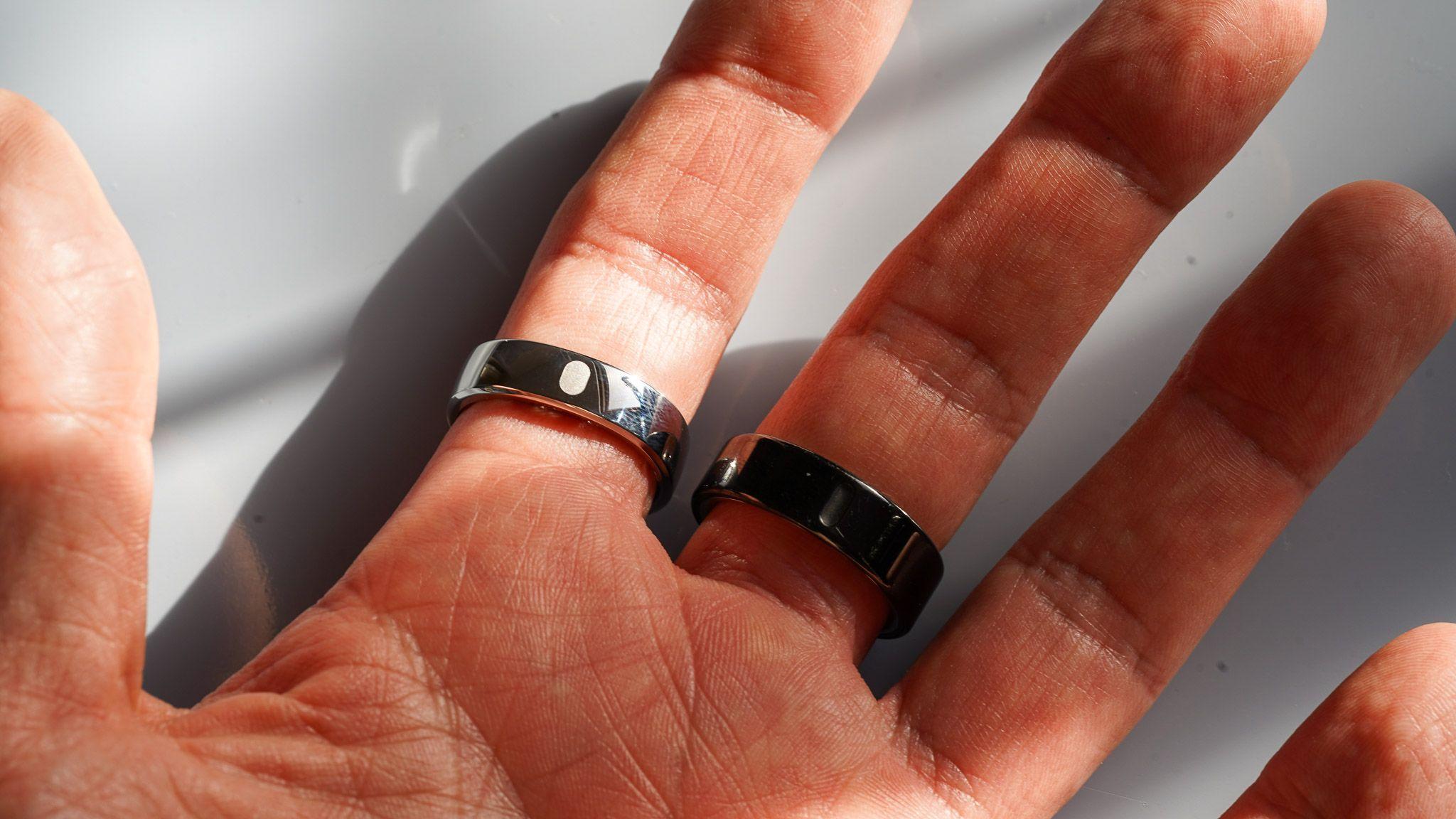
The smart ring market has cooled, but the next phase could decide its long-term future
Smart rings promised a wearable revolution - now they're fighting to stay in it
The smart ring market has slowed, but its next steps could determine its long-term future.
For a moment, smart rings feel like the next big leap in wearables.Smaller than smartwatches, sleeker than bands, and something you can wear all day and forget about.
In short, these rings promise to provide in-depth health information without the digital noise.A few years later, that commitment hasn't faded, but there's no denying that momentum has slowed.
The smart cycle market has not crashed, it has slowed down.Instead of a flow of new ideas, in 2025 we have seen incremental updates, fashion trend, and a category increasingly defined by what it can't do rather than what it can do.
As we head into 2026, the question is not whether smart rings have a future;it's about what shape the future will take and who will still be standing when it arrives.
Circular problem
The crux of the problem is the form factor itself.A smart ring should be small, round and unobtrusive.This is his greatest attraction and limitation.
The Oura Ring 4 doesn't have a screen to work with, the Ultrahuman Ring AIR is almost indistinguishable from its side-by-side ring competition, and the RingConn Gen 2 Air leaves little body space for sensors, batteries, or useful interference.
Once you've measured your sleep, heart rate, HRV and skin temperature, there's not much more you can add without fundamentally changing what a lap is.
Get all the latest news, reviews, prices and buying guides on great tech, home and functional products from the experts
That's why most of the recent updates have been used to guide the software.Aura, UltraHuman, and RingCon all improve applications, new insights, and the greatest interpretation of current data.
The problem is that software updates don't make the same noise that hardware does.They often come out quietly, unnoticed by the average user, and it is difficult to convince someone on the fence to finally buy.
Even when improvements are important, they don't always feel happy.In a market driven by innovation, "your smart ring counts steps accurately" doesn't move the needle.
A market with few players
Another problem is simple saturation, or rather the lack of it.There are only a handful of serious smart ring manufacturers operating worldwide: Oura, Ultrahuman, RingConn, Samsung, Amazfit and Circular, but the odd niche manufacturer pops up every now and then.
That means only a few new products land each year.Compare that to smartwatches, earbuds and other wearables, where constant iteration keeps the product in the public eye.With rings, long gaps between launches make it easy for categories to fade into the background.
It doesn't help that some of the biggest names in wearables are still missing.Apple and Garmin in particular have ring-shaped holes in their product cases.
Their entry will drive down prices;It will make innovation faster and legitimize a larger category.Now their absence has the opposite effect: fewer competitors;Low demand and slow growth.
Samsung should have changed that.The Galaxy Ring was positioned as the start of something bigger, but expectations for a quick follow-up have already been muted.If one of the world's biggest electronics brands doesn't iterate aggressively, it sends a worrying message to the rest of the market.
When it comes to fashion, it's suddenly heavy.
Recent launches have focused heavily on design, materials and collaboration, positioning smart rings as lifestyle accessories first and second health wear.The Ultrahuman Diesel collaboration is a perfect example, while Oura completes experiments with prizes and advises accessories to contain new sensibilities.
There is nothing wrong with this pivot;in fact, it is probably necessary.If the hardware can't be changed much, the aesthetics become a battlefield.The risk is that smart rings feel more like sensor trinkets than serious tech products, limiting how much people are willing to pay for or trust them.
At the same time, attention has shifted elsewhere.Clear glasses, such as the Oakley Meta Vanguards or the Oakley Meta HSTN, have become a new wearable sight, sucking oxygen from the room while the rings try to find a second air.Compared to AI glasses with built-in cameras, speakers and assistants, a sleep ring suddenly looks… quiet.
The result of going from hero to supporting role
Another, more existential threat is emerging: smart rings are being recast as accessories rather than stand-alone devices.
Increasingly, rings are being touted as controllers for mixed-reality headsets or smart glasses, more valuable for gesture input than health tracking.
While technically a meaningful use case, it risks undermining the original promise of the genre.A ring designed to control others will feel less necessary than a ring designed to understand you.
When a product becomes peripheral, its value proposition and audience narrows.
O FEA
Despite everything, smart rings are still not without ideas.They are just at a crossroads.
True innovation exists, but it is expensive and risky.Concepts like the Pebble Index 01 show that the form factor of the ring does not have to be linked to health.
The device completely eliminates health tracking and repurposes the Ring as an input device for AI and memory capture. A reminder that if companies solve the same problems over and over again, this segment can become stagnant.
There is also room for smarter material choices and bolder design decisions.Ring screens sound far-fetched, but once upon a time, so were curved phone screens.New alloys, ceramic alloys or modular shells can allow brands to differentiate themselves physically, not just cosmetically.
Fitness-first rings are another untapped avenue.Most current models shy away from physical activity and require users to remove them during strength or high-impact training.
A soft shell or gym-safe ring designed to be worn while lifting, running or training will open up a whole new audience and finally answer the question of why a ring is better than a watch.
Hype problem
What the intelligentsia needs most is better storytelling.Collaboration shouldn't just be about visuals.They should create a culture in the same way that LEGO does with their franchises.
Limited releases, seasonal drops and recognizable themes can keep the conversation alive between hardware cycles.If people are queuing up for sneakers, there's no reason why they shouldn't be excited about something wearable, as long as it feels right.
There are also strong signs that the sector may be moving further towards profitability.Contactless payments, secure identities, and identity verification capabilities seem like the next natural step, especially as NFC technology advances.A ring replaces a wallet, key, or access card that automatically supports its position on the finger.
A quiet, bright future
Smart rings probably won't dominate the wearable conversation in 2026, and that might be a good thing.Their future looks less like a mass market boom and more like specialization.
Some brands will double down on health and go for medical credibility.Others will focus on fashion and culture.Some will abandon wellness entirely and reinvent what a ring can do.The danger is in doing none of these things decisively.
The Smart Ring market does not require much additional updatesIt must be confirmedBecause if rings don't reinvent themselves soon, they risk becoming the most forgotten clothing of the decade - small, elegant, and quiet left behind.
Matt Kollat is a journalist and content creator who works for and its magazine counterpart as an active editor.His areas of expertise include wearables, drones, fitness equipment, nutrition and outdoor equipment.He joined in 2019. His name appears in several publications, including Techradar and Fit&Well, among others.Matt has also collaborated with other content creators (eg Garage Gym Reviews) and judged many awards, such as the European Specialist Sports Nutrition Alliances ESSNawards. When he's not working, running or cycling, you'll find him roaming the countryside trying out new tools for podcasting and content creation.
You must verify your public display name before commenting
Sign out and then sign in again, you will be prompted for your display name.